Overview
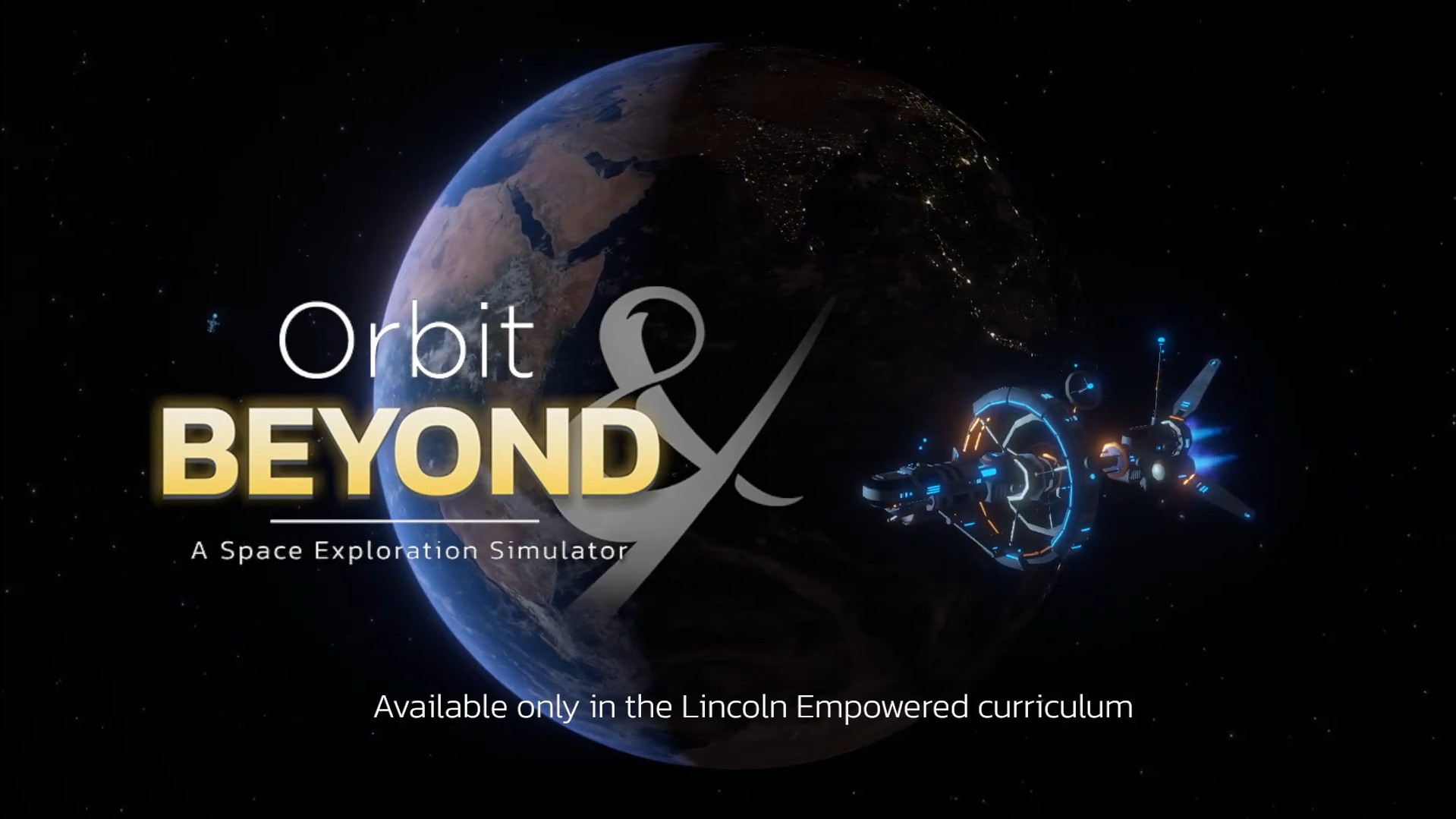
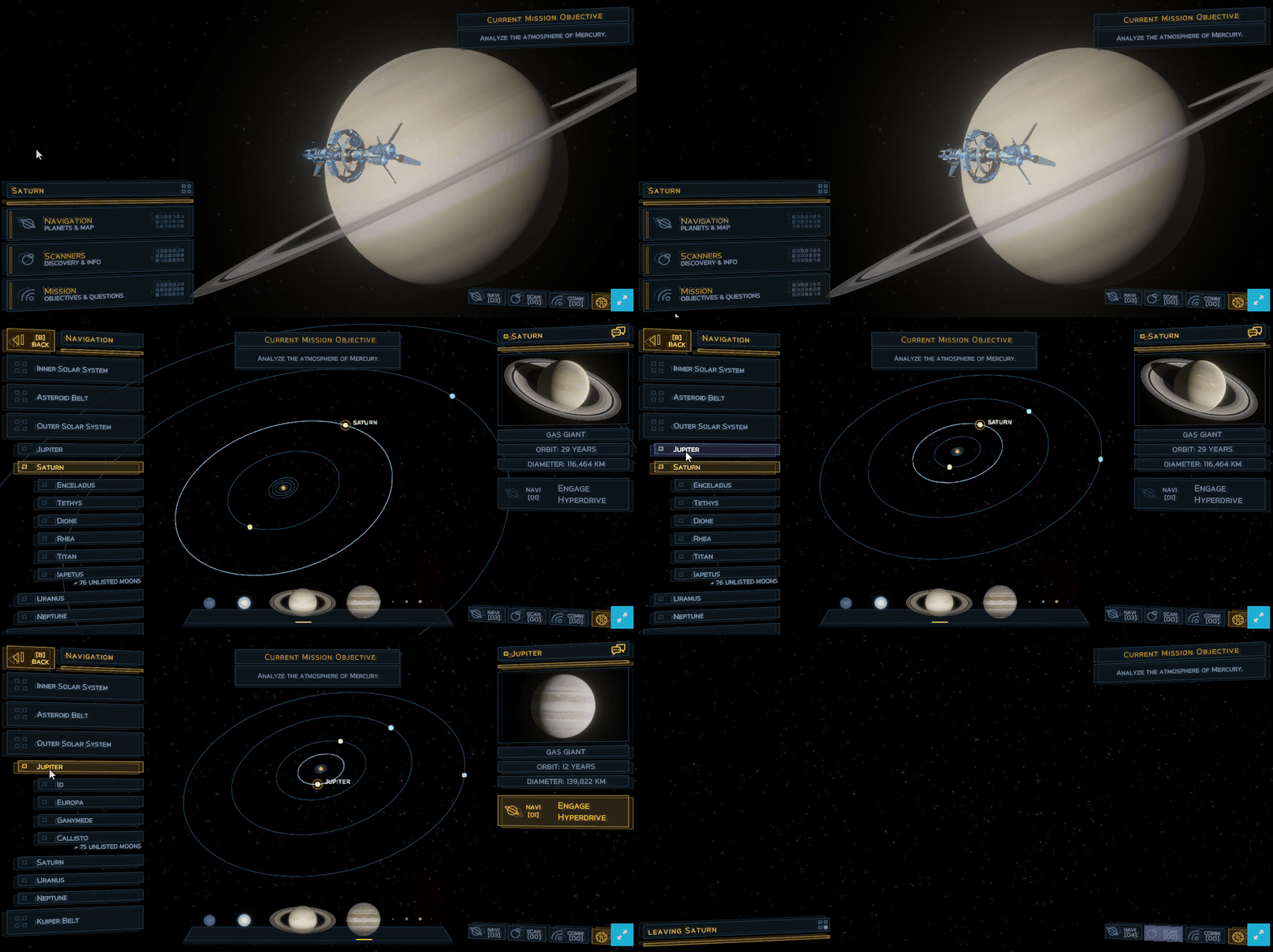
A secondary earth science and space game developed during our early adoption of Unity. I took the project from an open-ended brief — no defined concept, no scope, no delivery path — through concept proposal, stakeholder approval, interactive prototyping, and production UI. The holographic UI system we built became the foundation for UI standards used across every title that followed.
Role
UI/UX design, concept development, interactive prototyping, cross-functional collaboration, astronomy/earth science research direction
Problem
The curriculum department had a request. What they didn’t have was any idea what that meant. Brainstorming sessions on the whiteboard generated ideas that never connected. The project was at risk of going nowhere — or going everywhere at once.
Solution
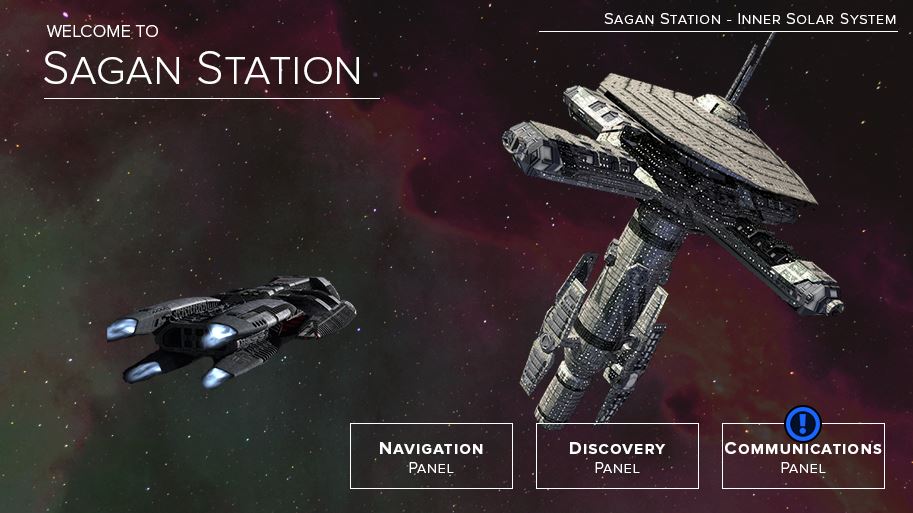
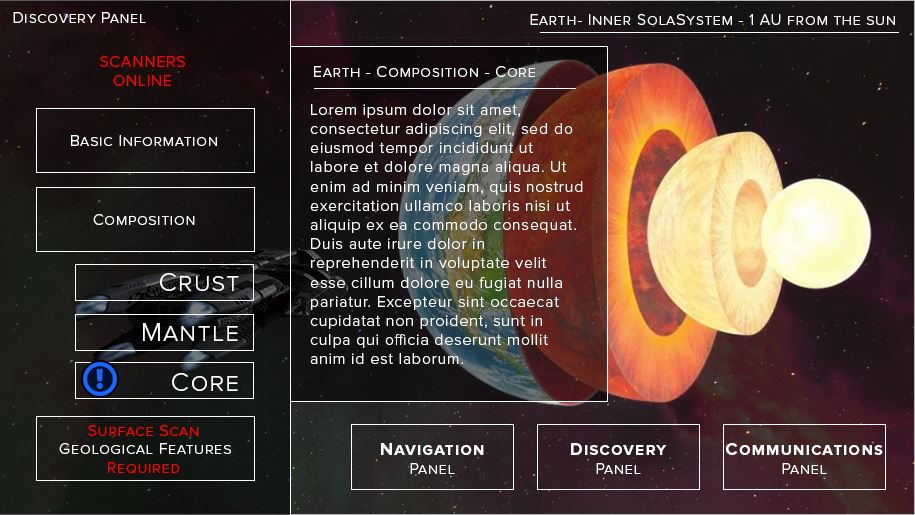
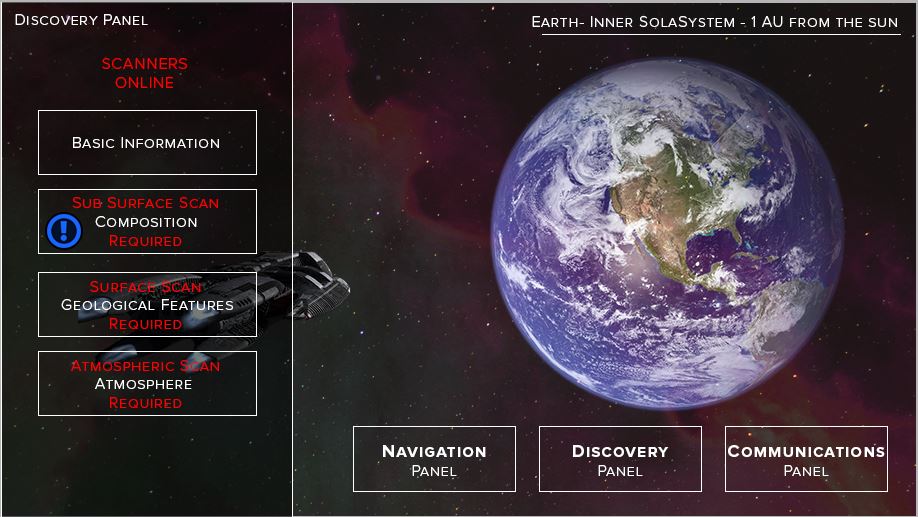
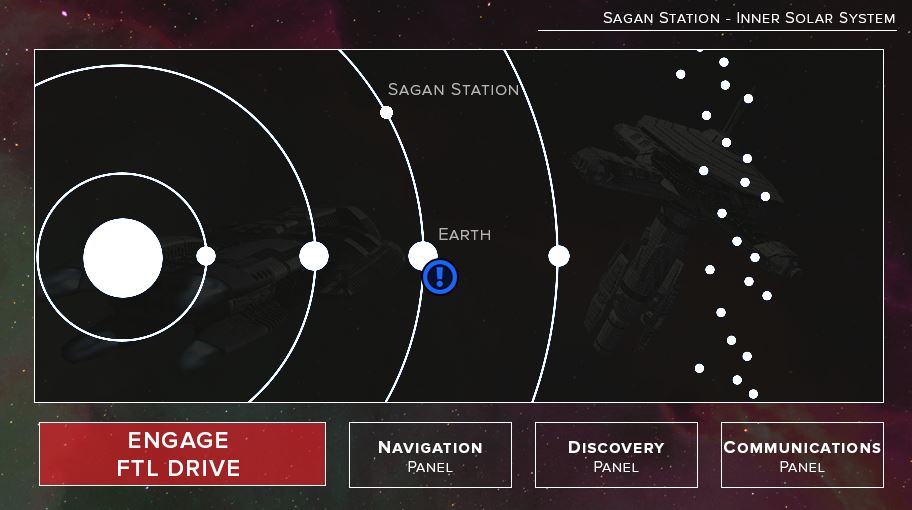
I stepped back and consolidated the team’s scattered thinking into a single concrete proposal. Medium-fidelity mockups. Enough to show the shape of a game and pressure-test it against the constraints that mattered: Unity feasibility, curriculum alignment, production scope, team buy-in. I presented to all stakeholders and got the green light.
Execution
The approved mockups converted into interactive prototypes in Adobe XD — giving the developer a working picture of user flow before any builds were committed. Problems surfaced early, when they were cheap to fix.
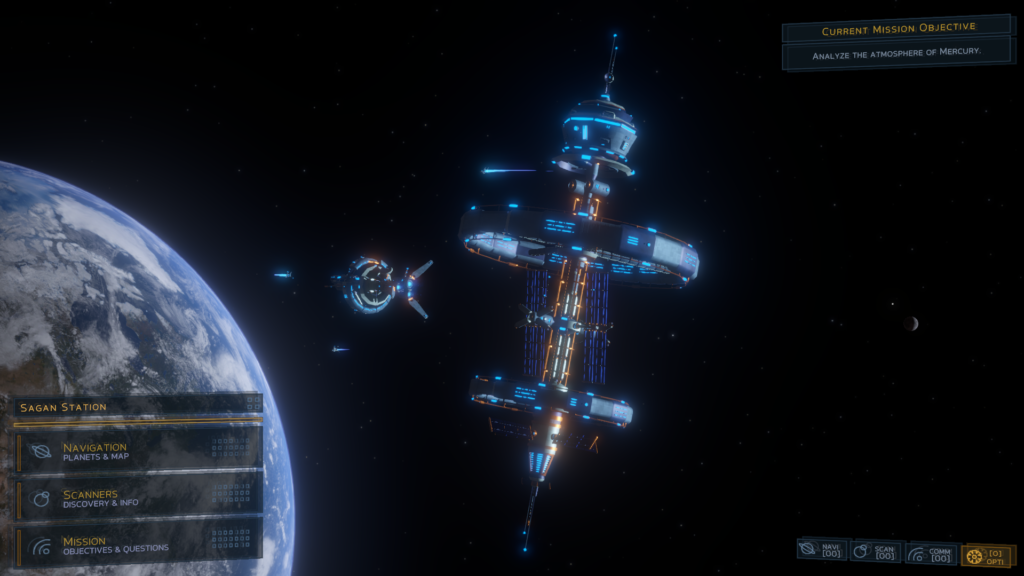
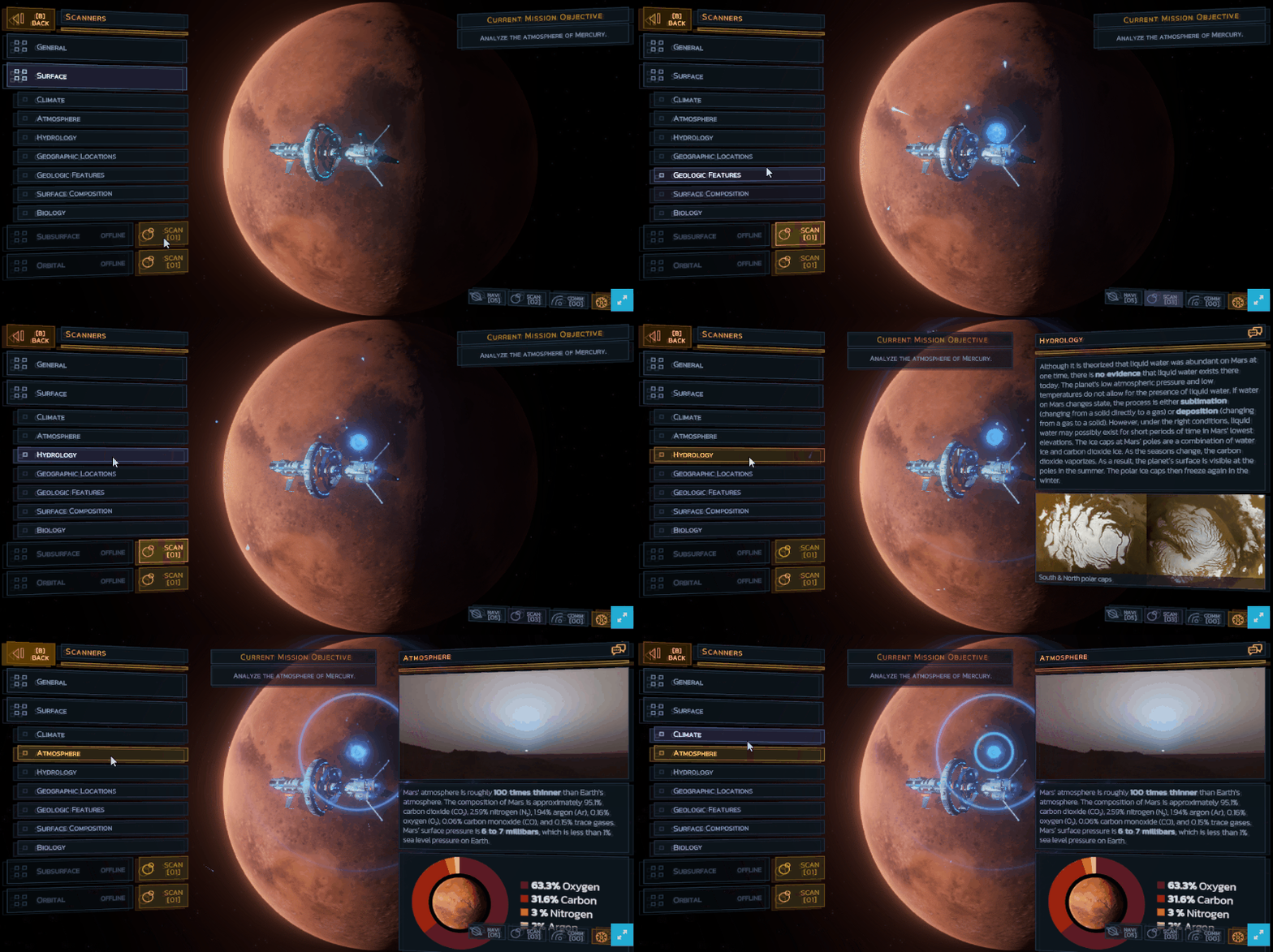
During production I focused on UI design and system implementation. The game’s UI had a holographic look; I worked directly with the developer to design and build it inside Unity. Neither of us had tackled a complex UI in the engine before. We figured out the architecture as we went.
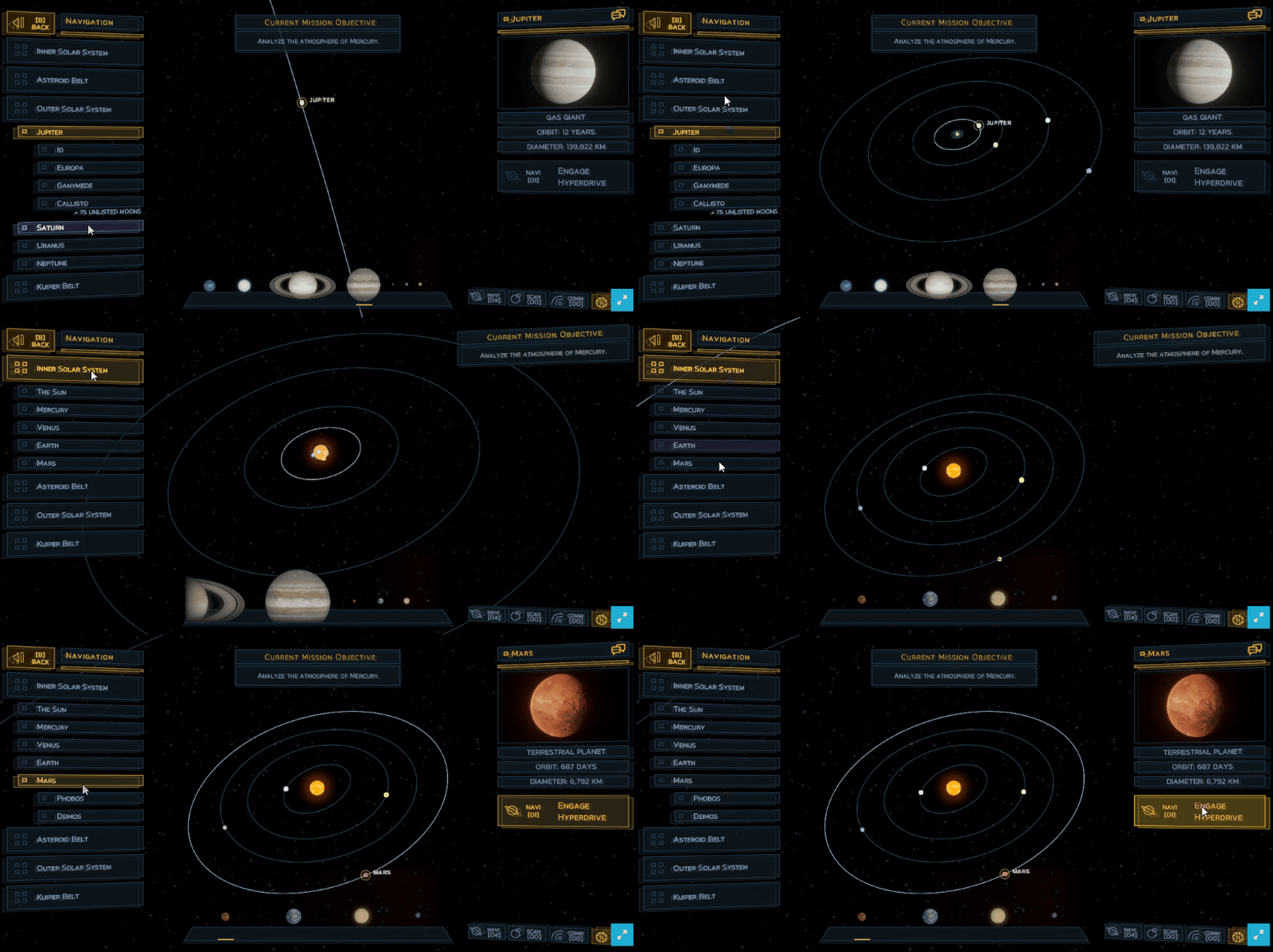
I also directed the visual tone throughout — grounding the aesthetic in real astronomy research rather than generic sci-fi. That distinction showed up in the final product.
The project ran about a year from brief to ship.
Outcome
Concept approved and moved to full production. Interactive prototypes reduced ambiguity and improved team alignment before development began. The final shipped game closely resembled the original mockups. The UI system we built became one of the team’s first robust Unity UI frameworks.
Impact
The UI architecture we developed on this project became the baseline for internal standards that evolved across all subsequent titles. The prototype-first approach — using low- and medium-fidelity work to validate direction before committing to builds — became a repeatable workflow for the team.