Designing Lesson Reinforcement That Doesn’t Feel Like a Quiz
The problem
Standard quizzes disengage students. We needed a way to reinforce lesson content that felt like play, not testing, and we needed a room of stakeholders to believe in the idea before building anything.
The solution
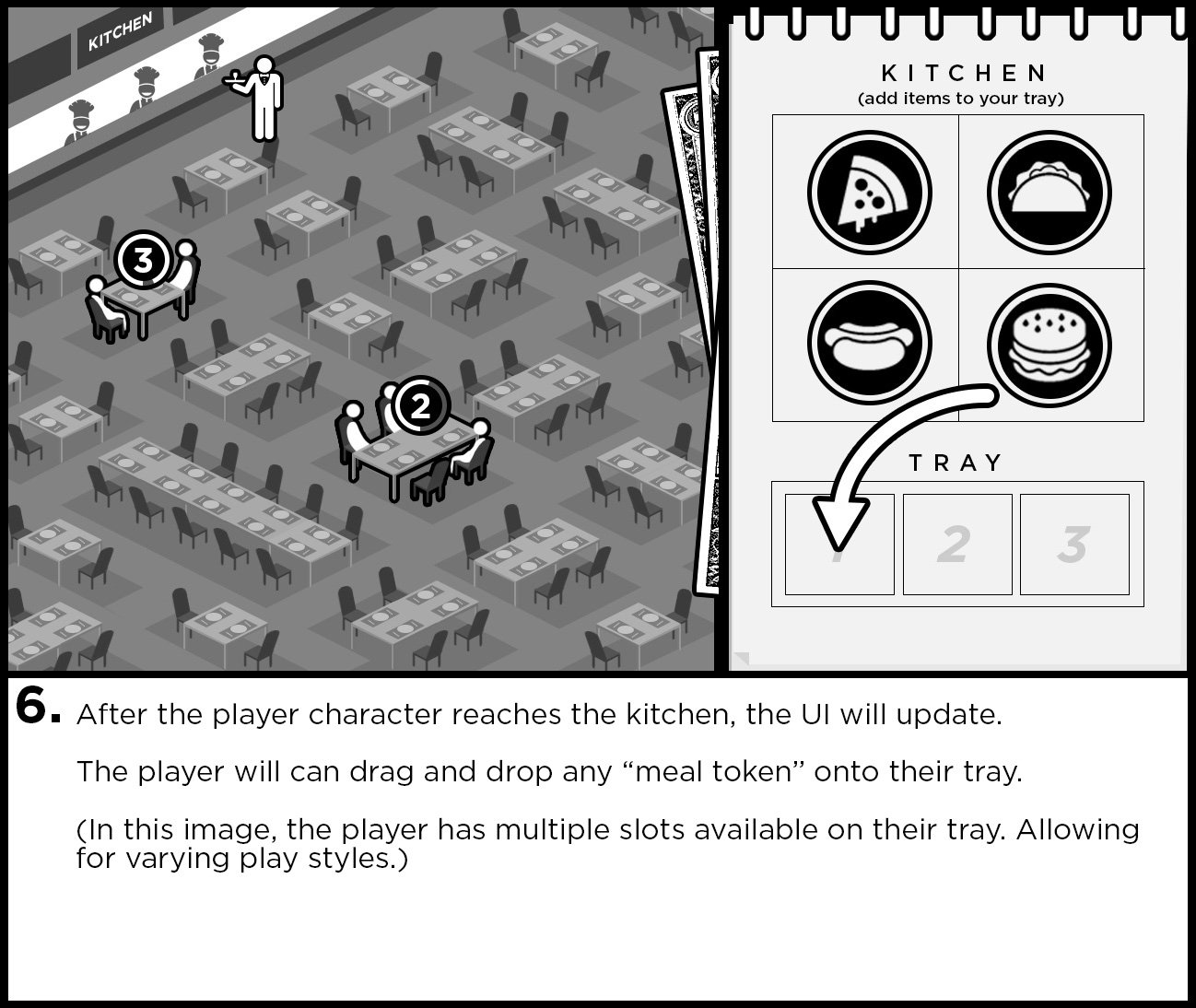
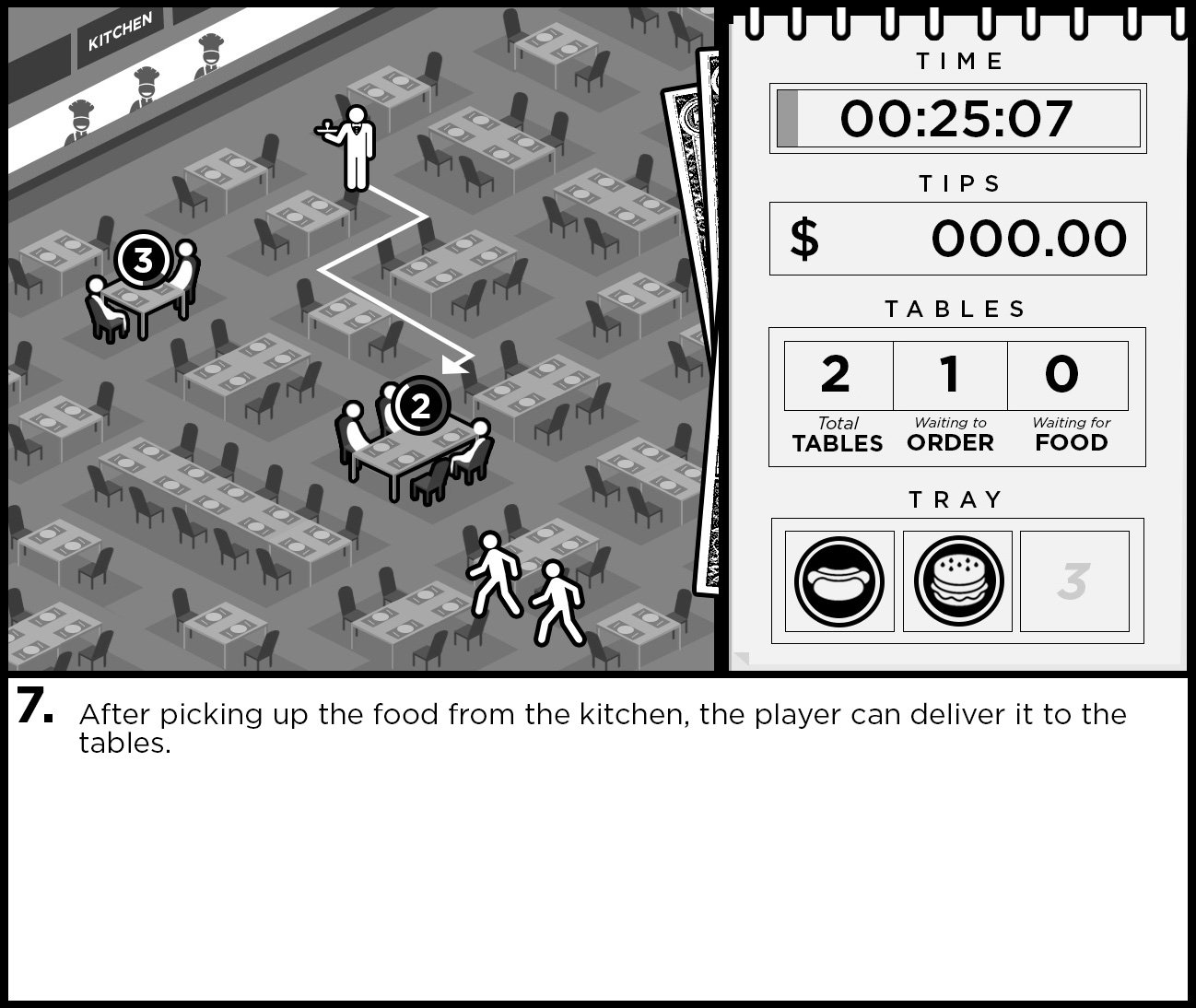
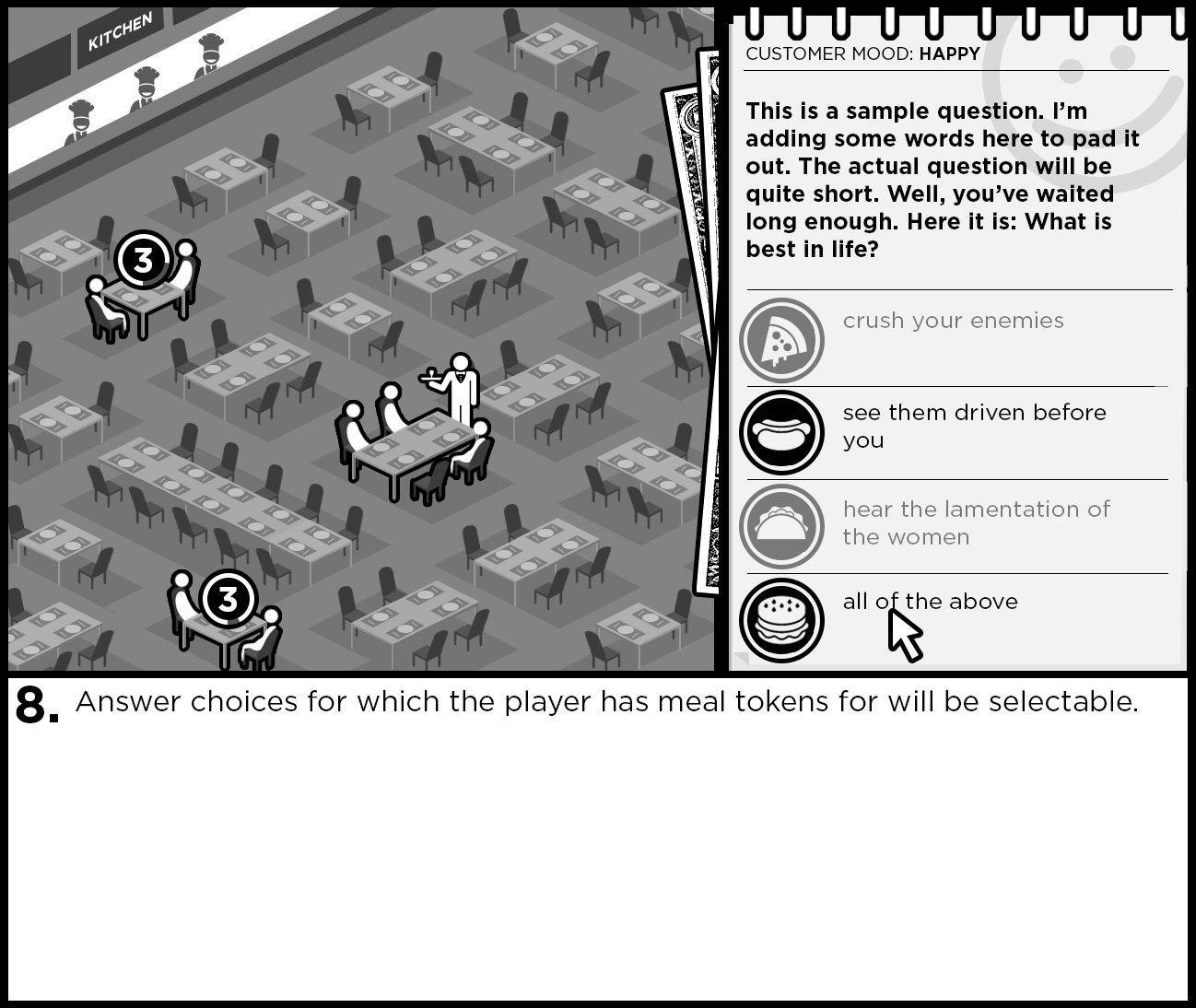
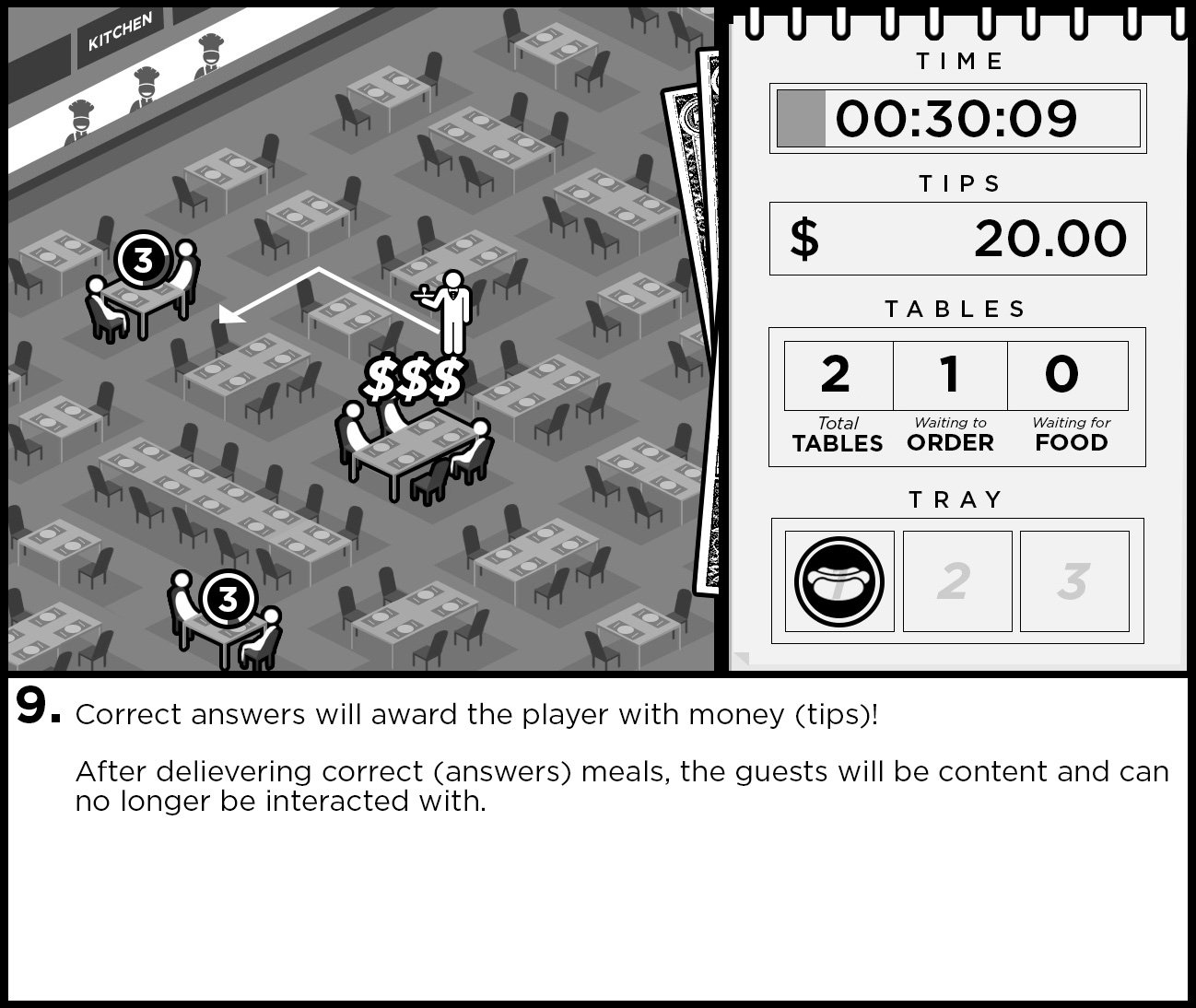
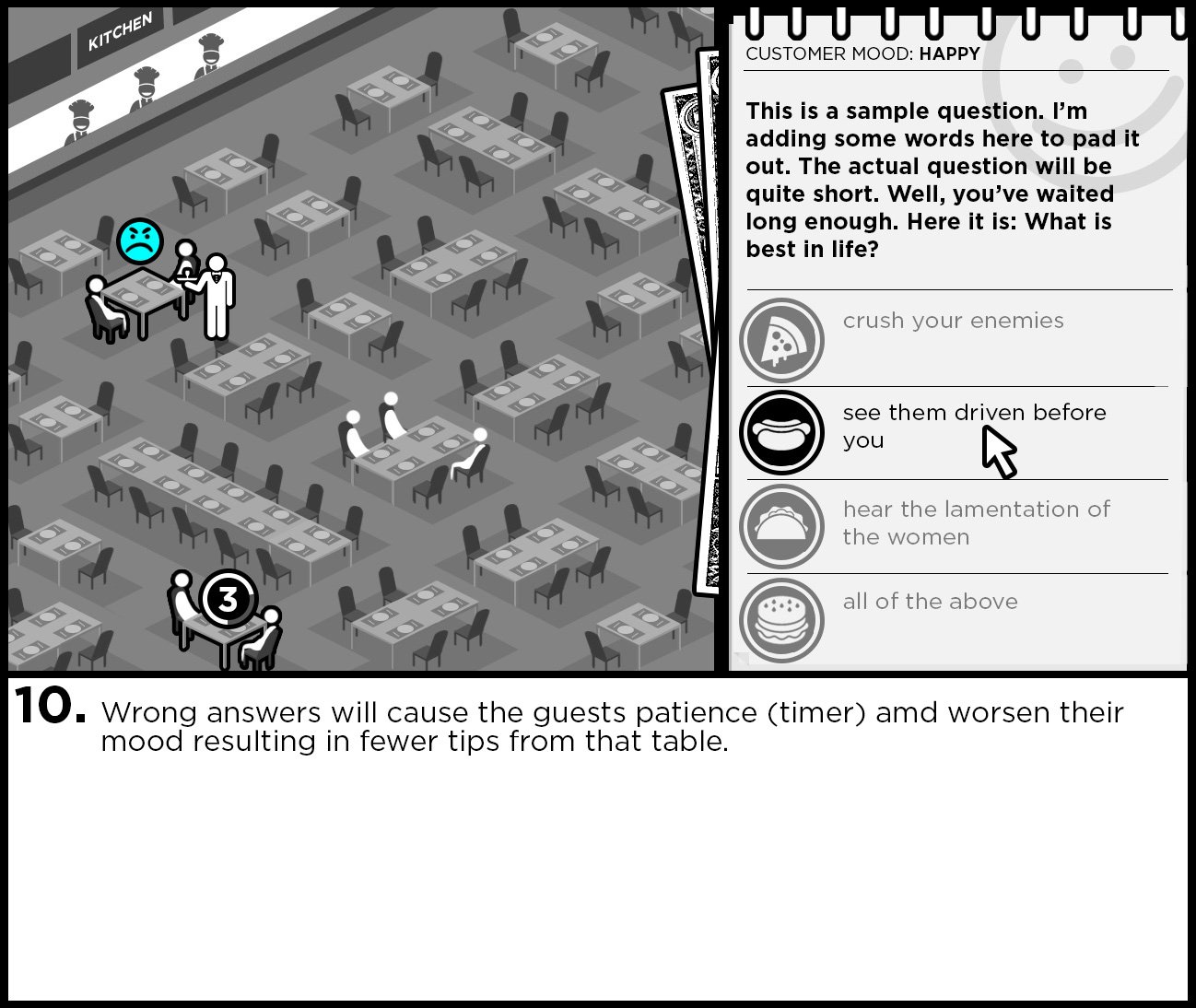
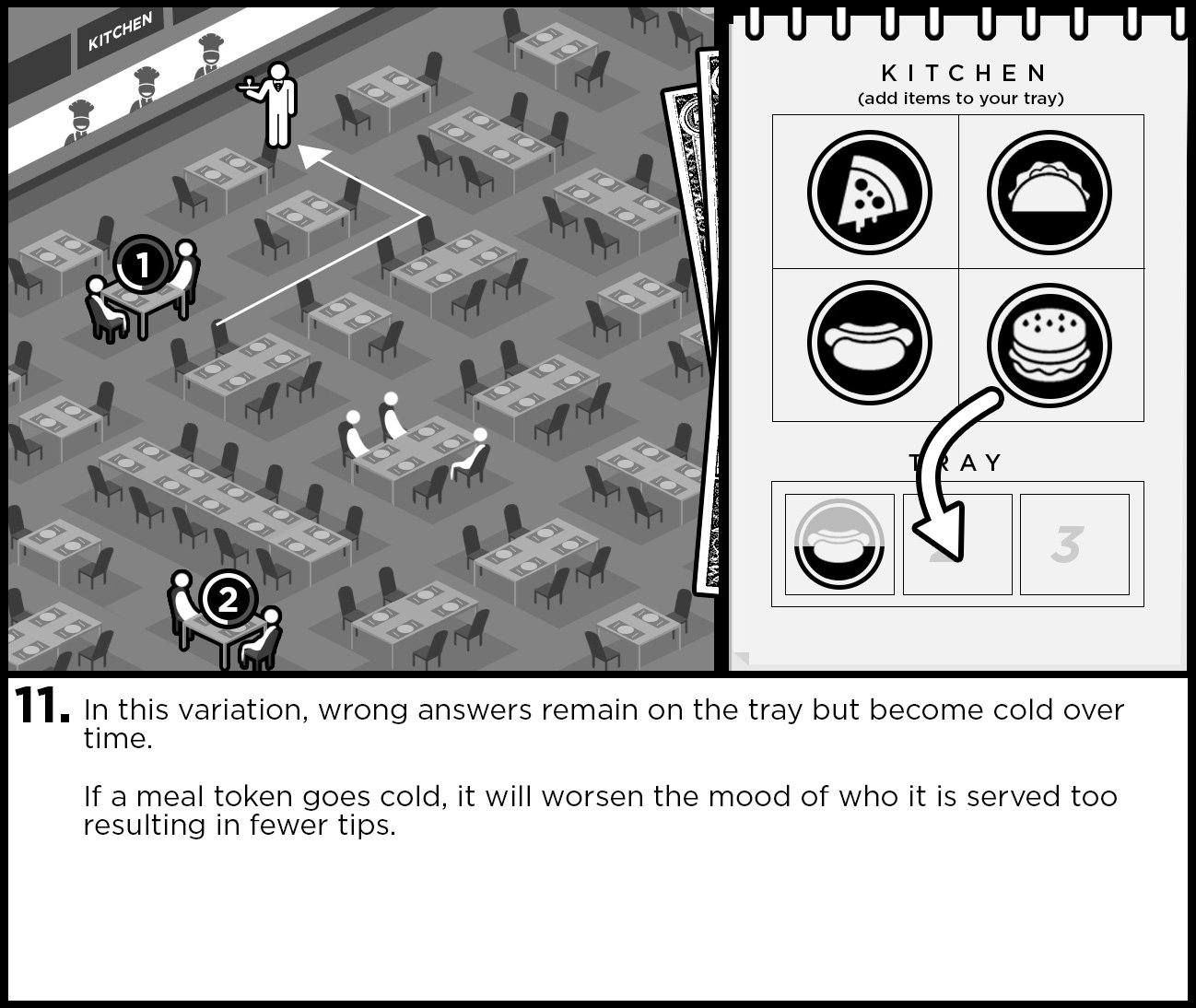
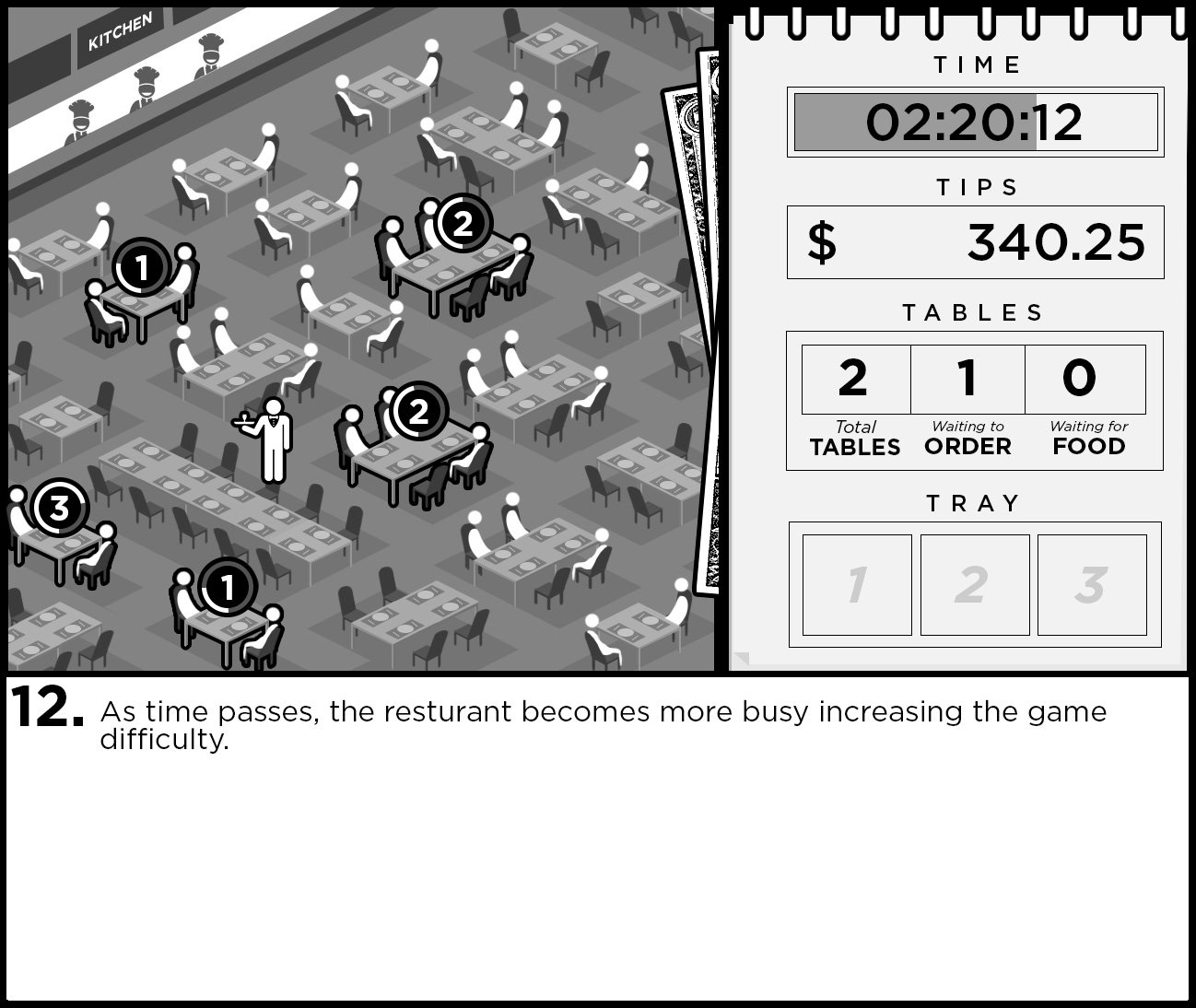
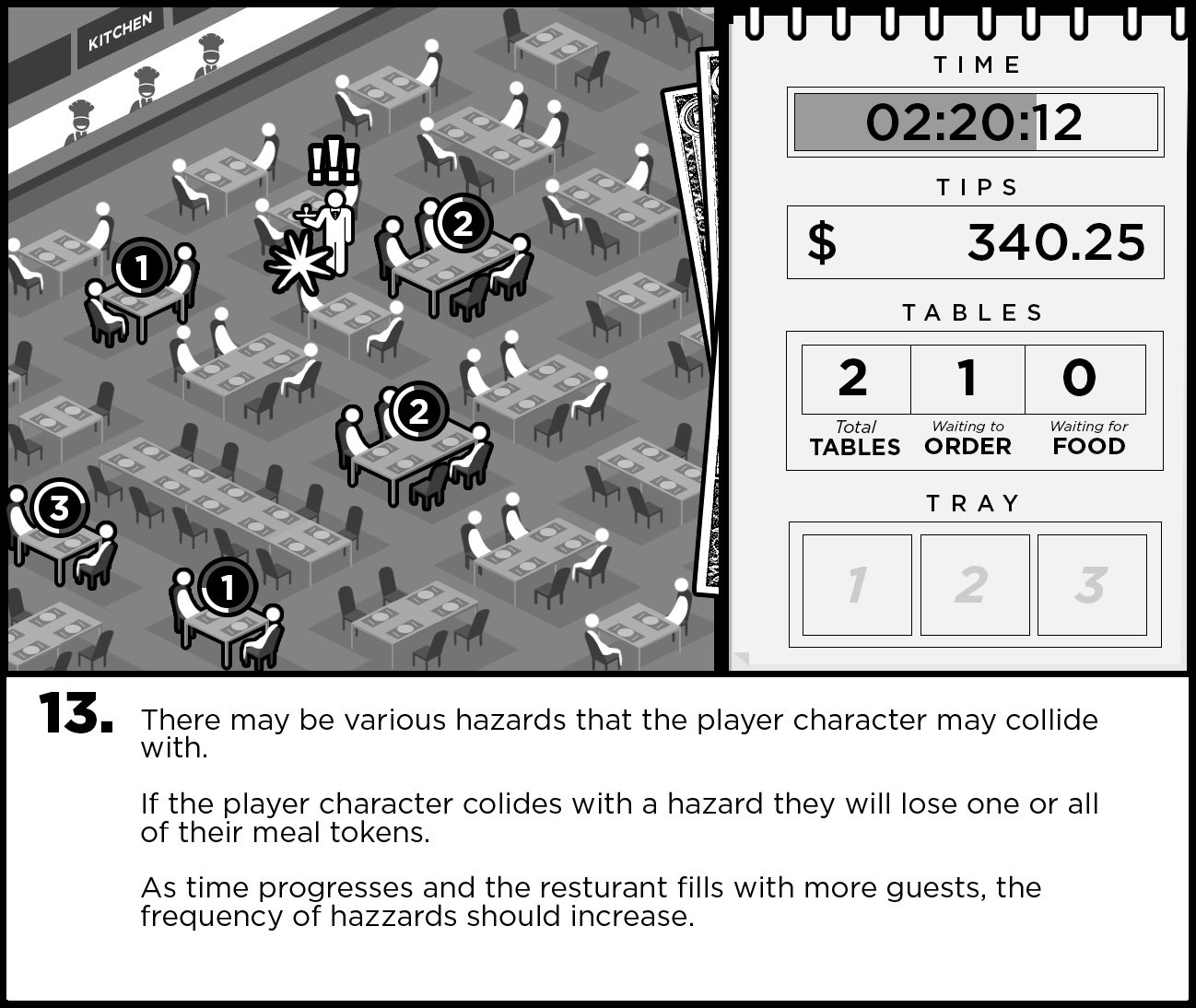
Low-fi storyboards are a design tool as much as a communication tool. When I’m designing, low fidelity keeps me focused on objectives instead of presentation. When I’m presenting to a room of experts, it keeps the feedback focused on what the product does, not how it looks. That feedback is the whole point. I need their insight to build something that works. If the conversation drifts to visuals, I lose the input I actually need.
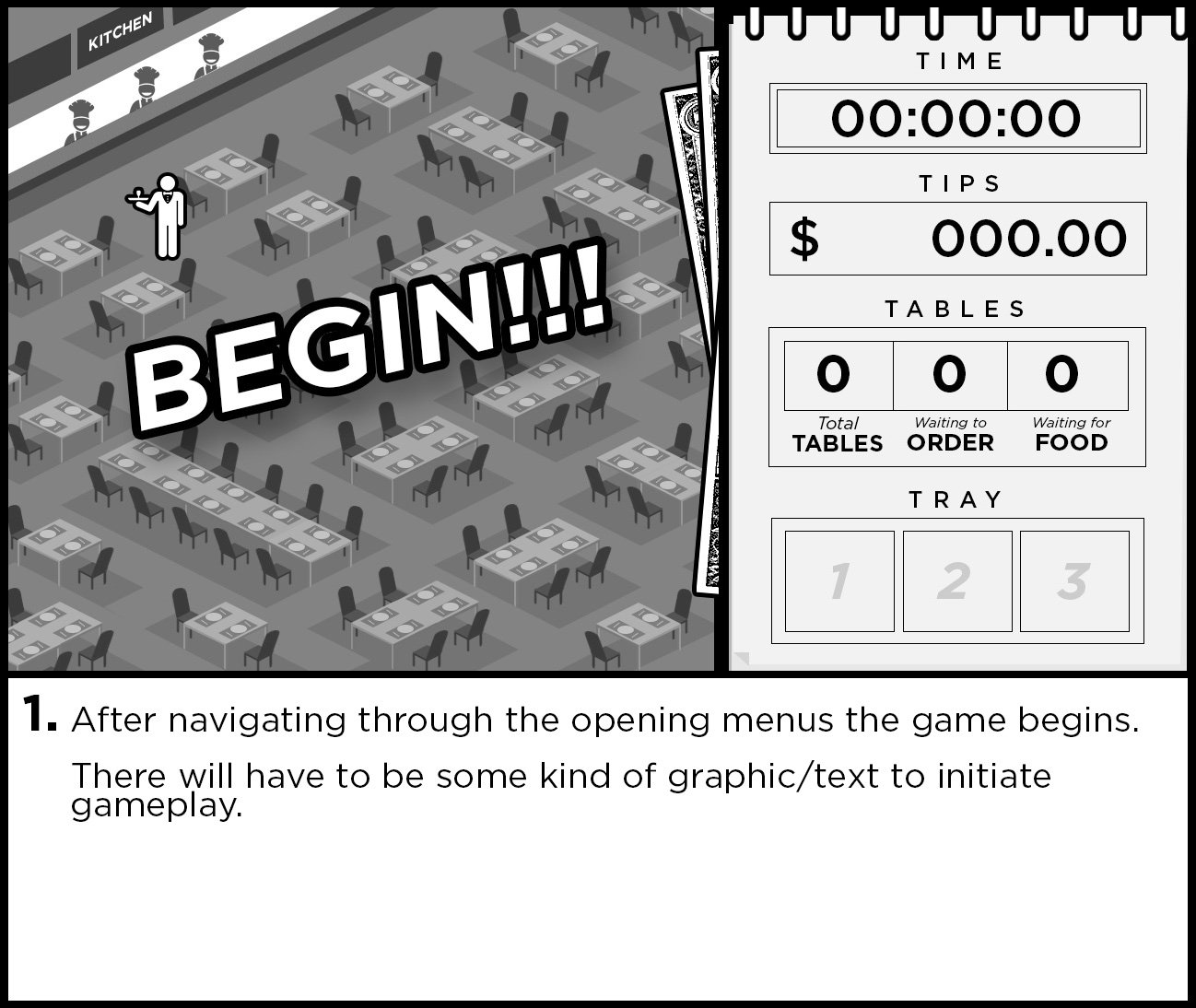
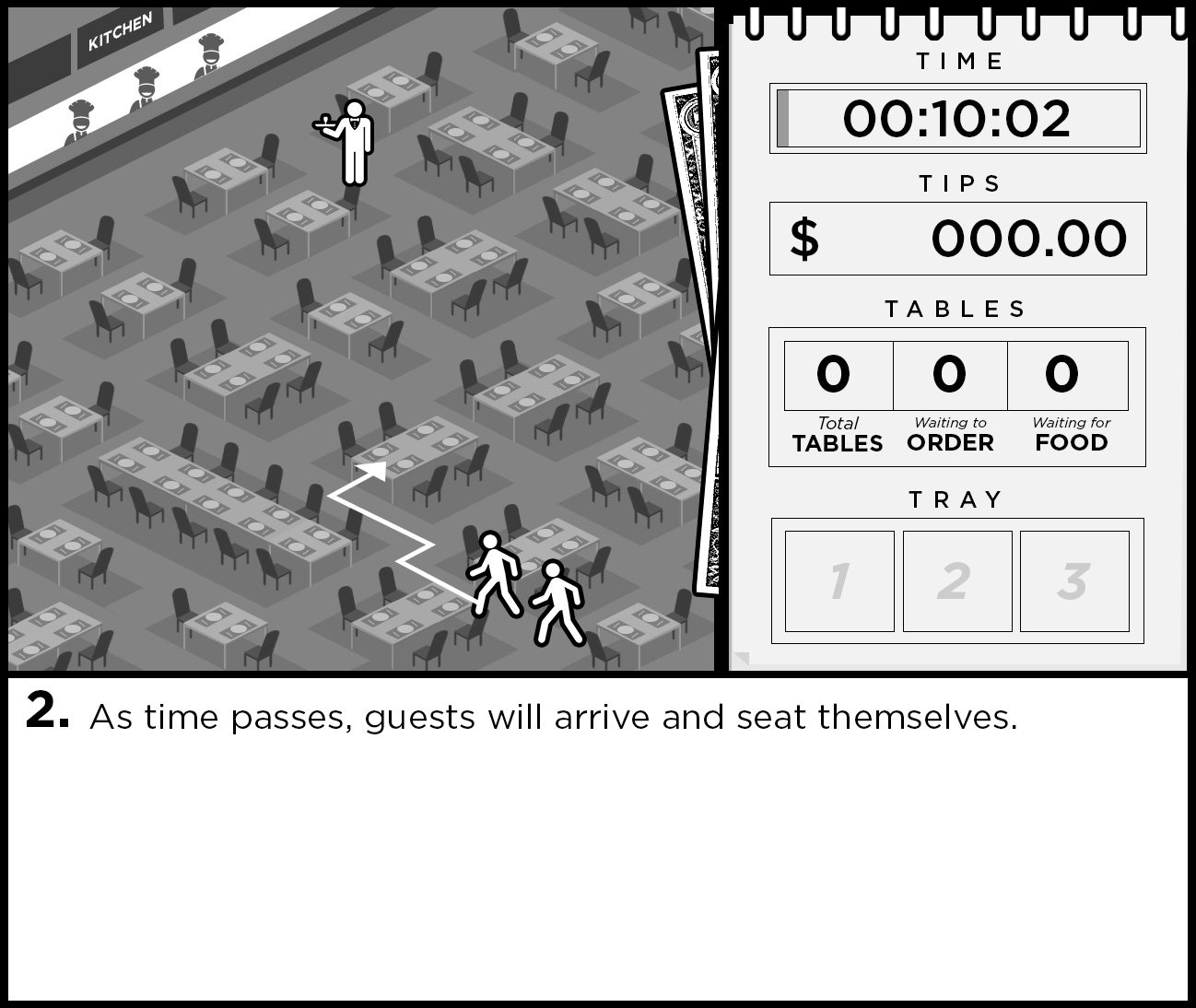
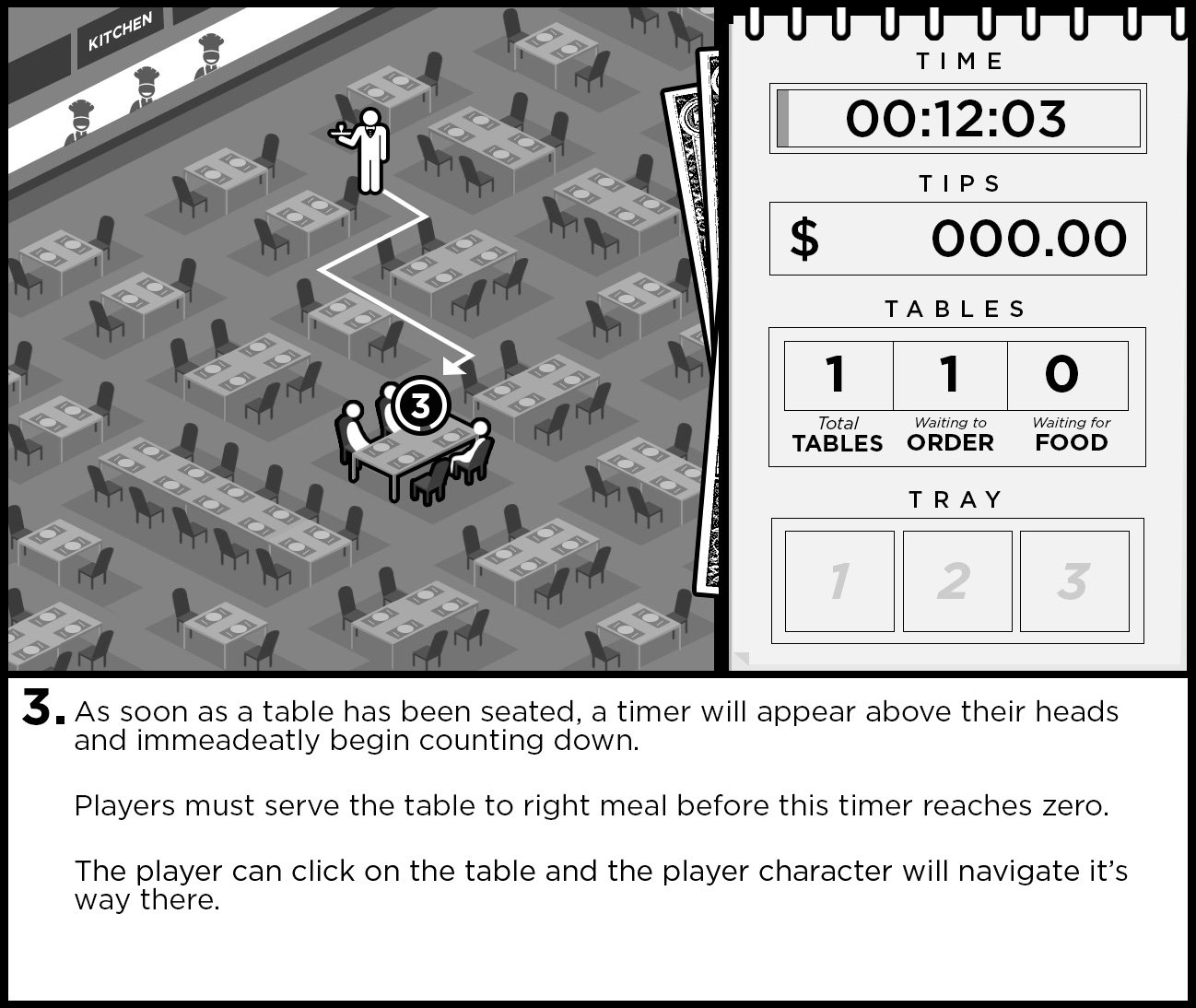
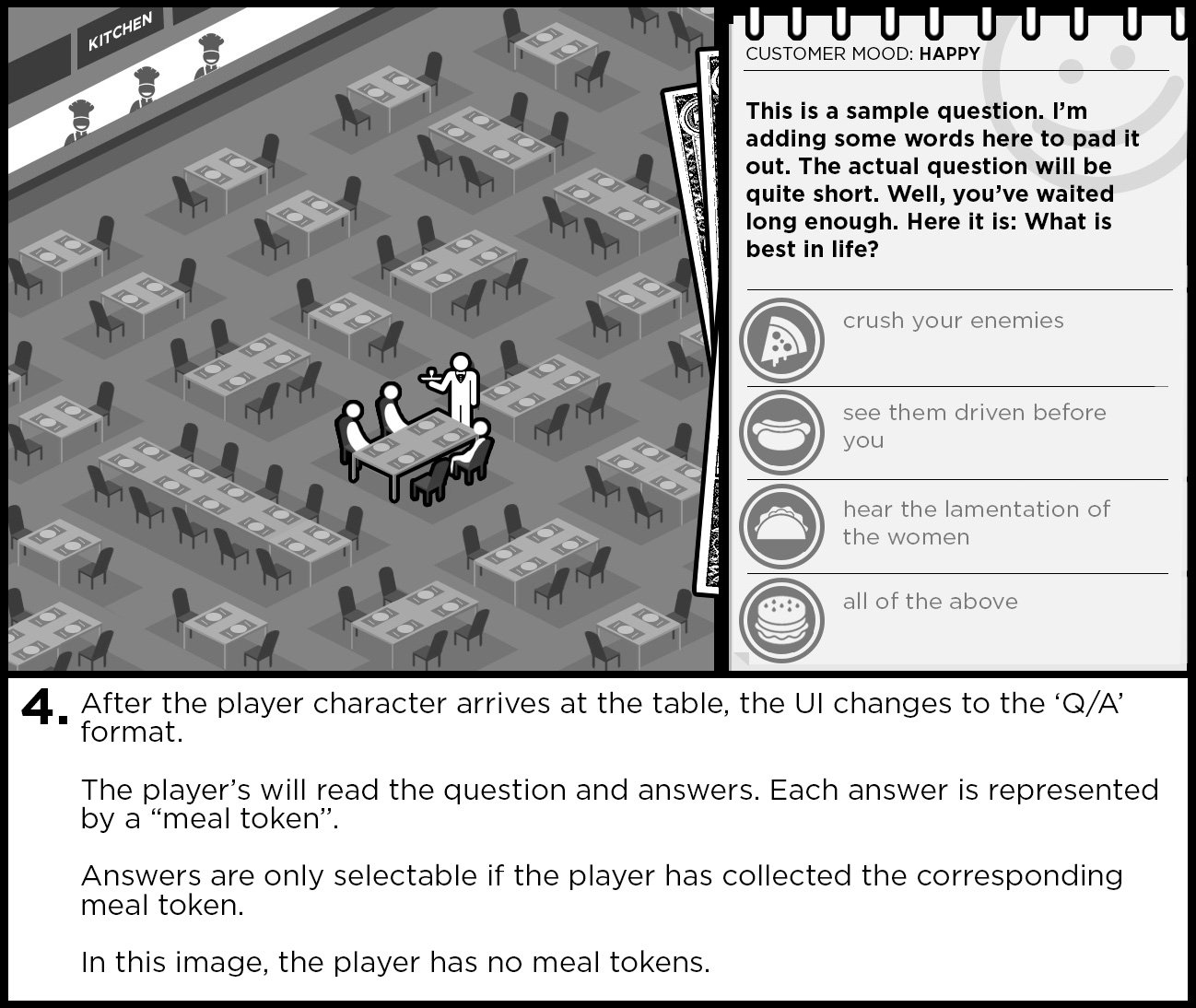
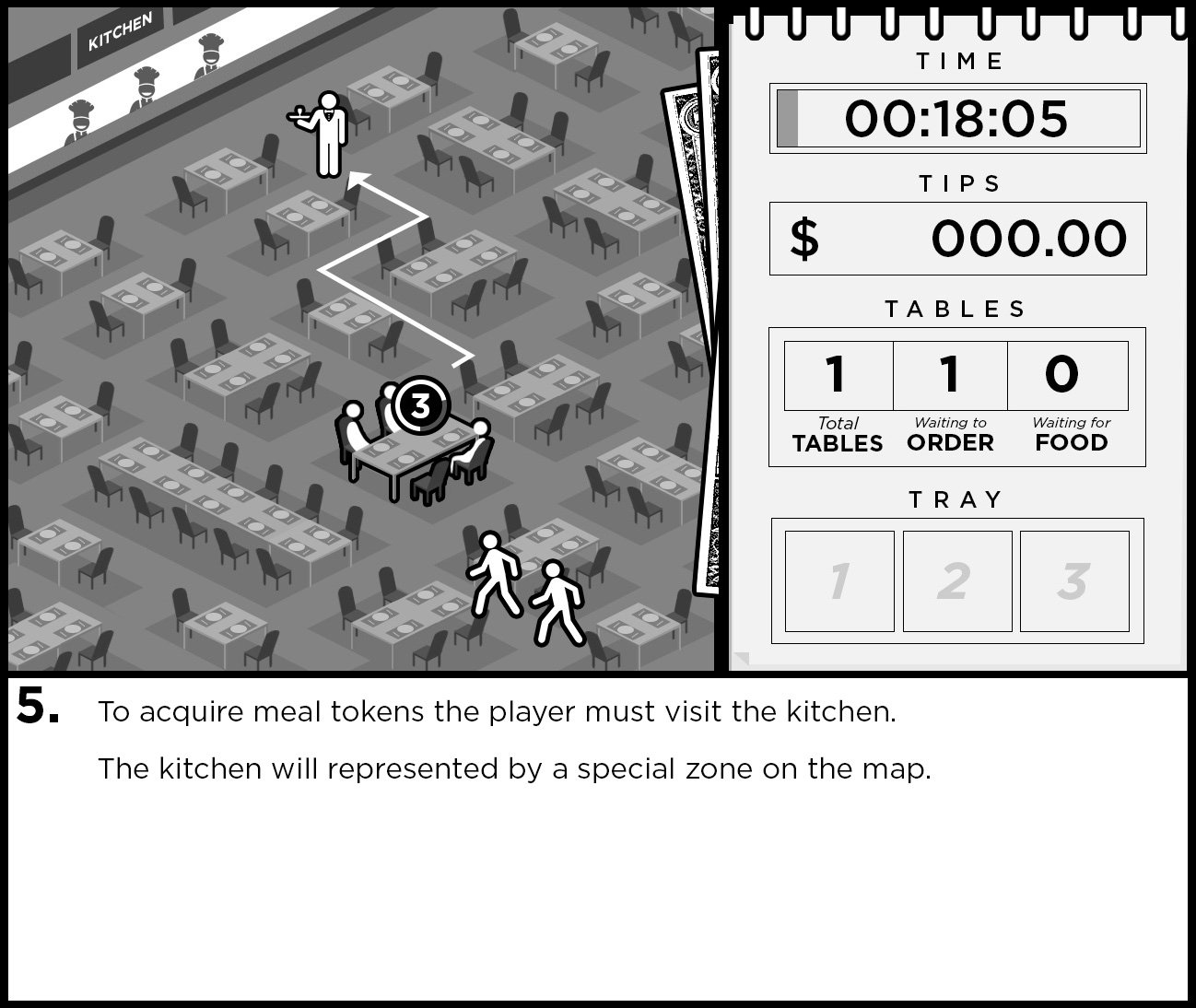
So I pitched Understaffed with black-and-white, comic-book-style storyboards instead of finished art.
The concept
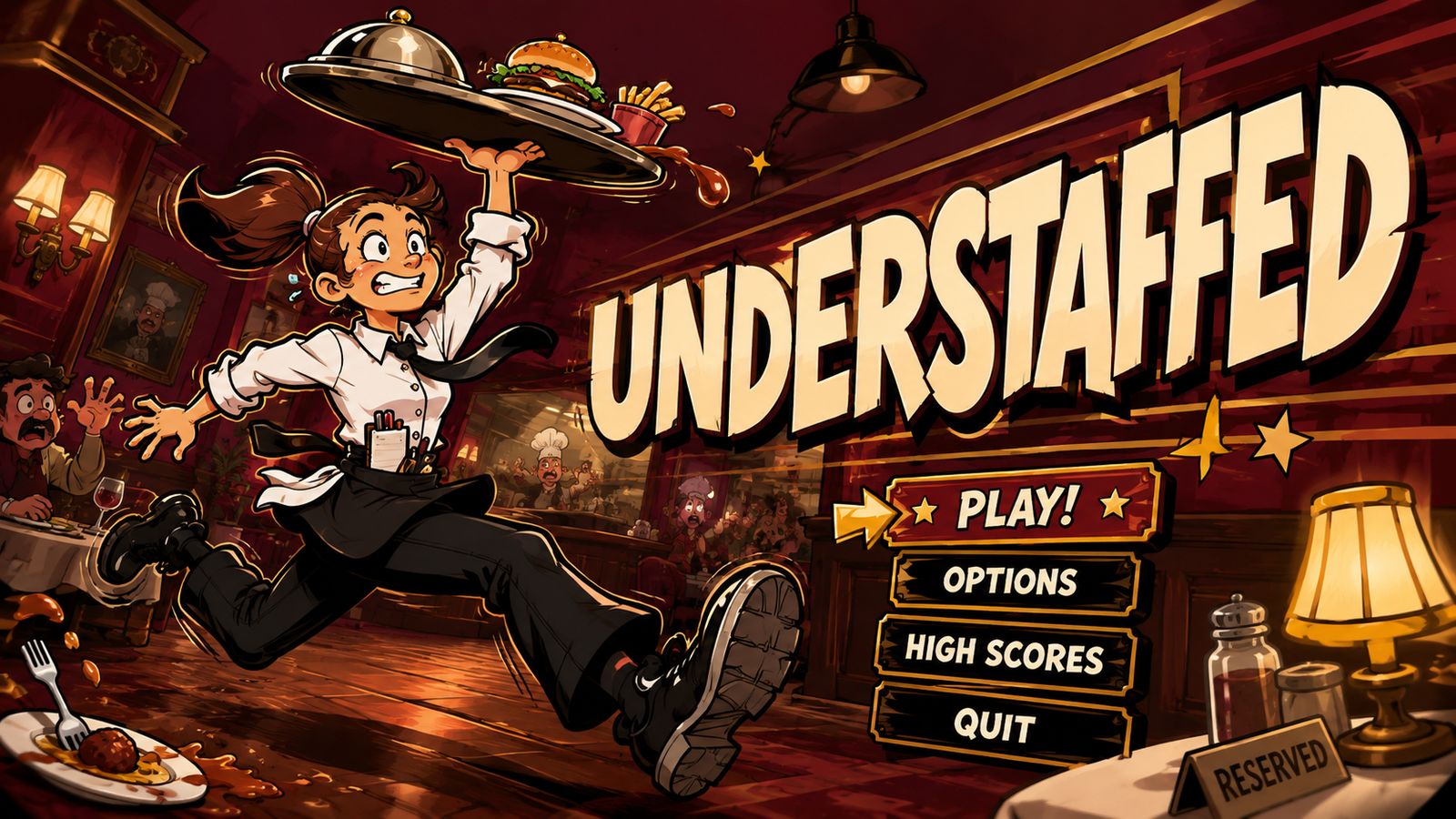
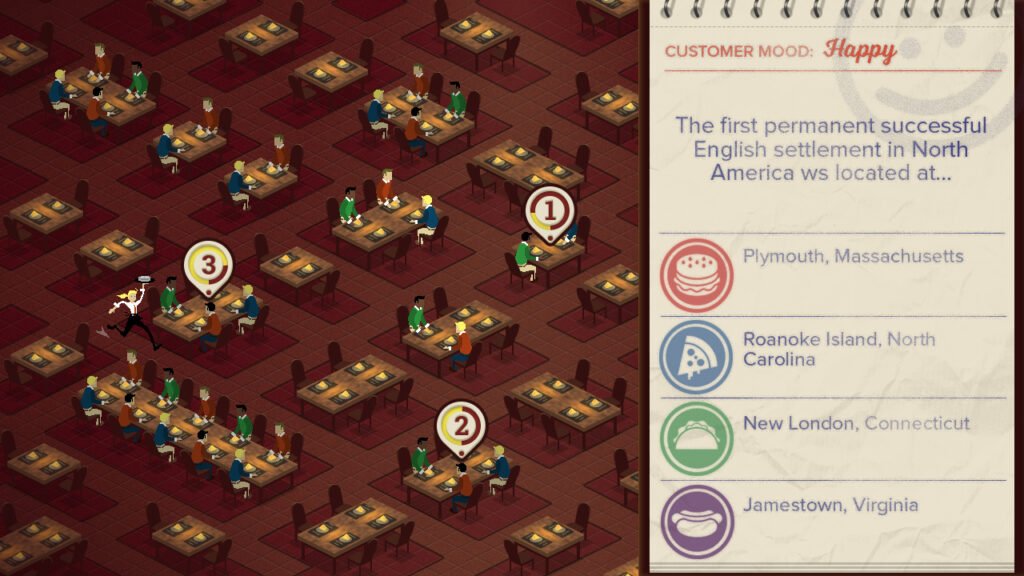
the player is a restaurant server. Customers sit down, a timer starts, and their order is a question. Answers are color-coded food items. Deliver the right one before time runs out, and juggle more tables as the shift builds.
Once the team bought in, hi-fi mockups came next, not to sell the idea but to guide art style, tools, and production.
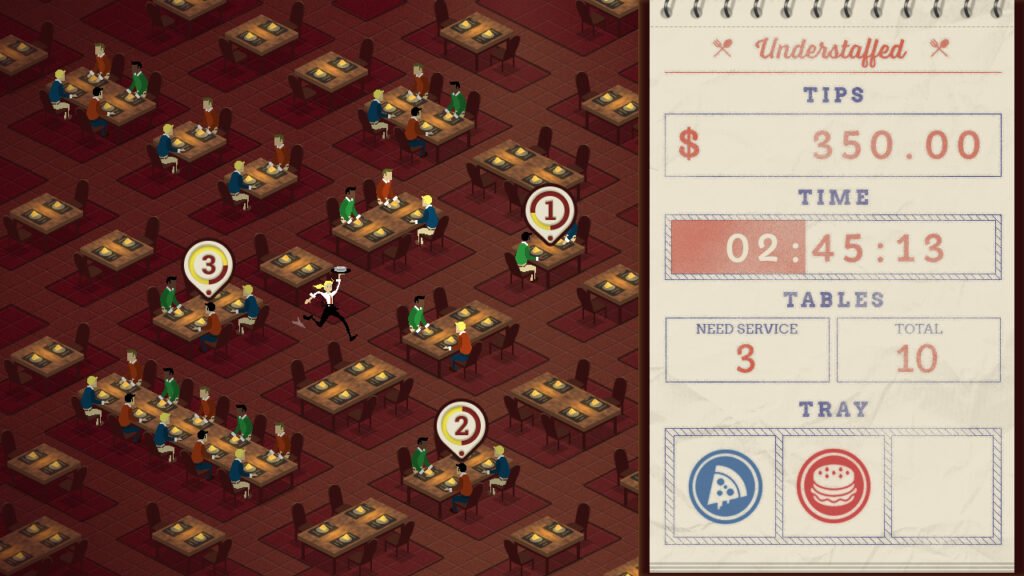
The outcome.
The storyboards let me demonstrate time management, memory, and lesson reinforcement in one sitting, with no code and no finished art. Fidelity became a tool for controlling the conversation: low-fi to design and win the room, hi-fi to build the thing.